


You’ve probably seen the photos — golden light, open savanna, a Land Rover silhouetted against the horizon. But what does a day on safari in South Africa actually feel like?
Spoiler: it’s nothing like what you’d expect. And everything you hoped it would be.
We went last June, and from the moment we stepped into the bush, the experience was unlike anything we’d ever done. Here’s an honest, hour-by-hour look at what a day at a luxury South Africa safari lodge actually looks like — so you can stop wondering and start planning.
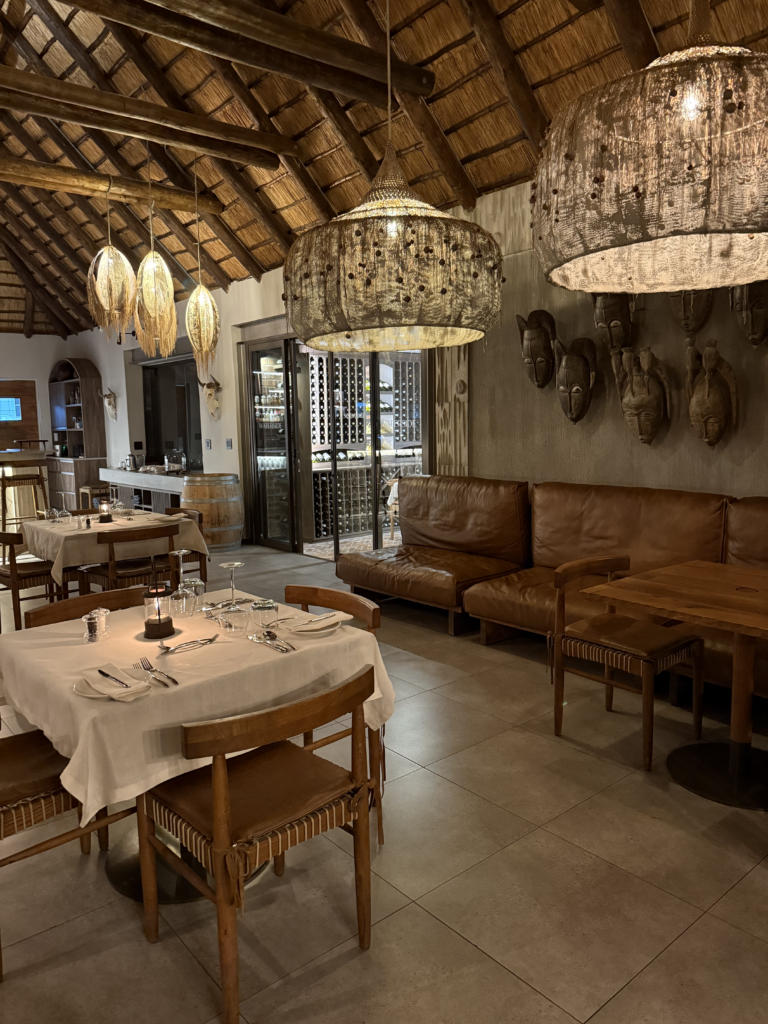
We stayed at Simbavati Waterside, and it set the bar for everything we now look for in a safari experience. Part of my job is knowing which lodges are the right fit for which travelers — and trust me, they are not all the same.
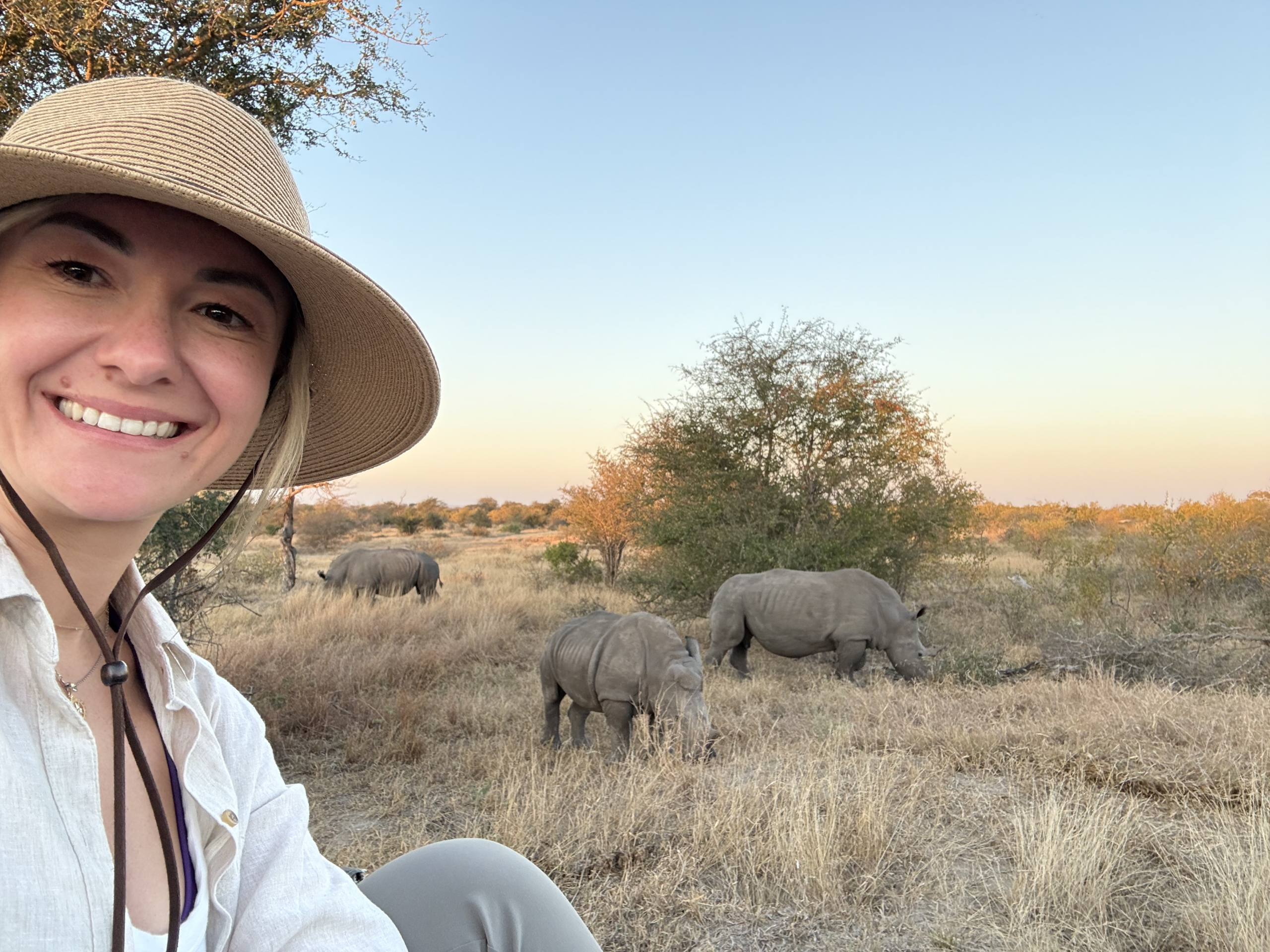
The Morning: Up Before Sunrise (And You Won’t Mind)
The wake-up call comes earlier than you expect on safari. Think 5:00 or 5:30 a.m. and it’s a literal phone call to your room. Somehow, it’s the easiest early morning you’ve ever had. There’s something about knowing lions are out there that gets you moving.
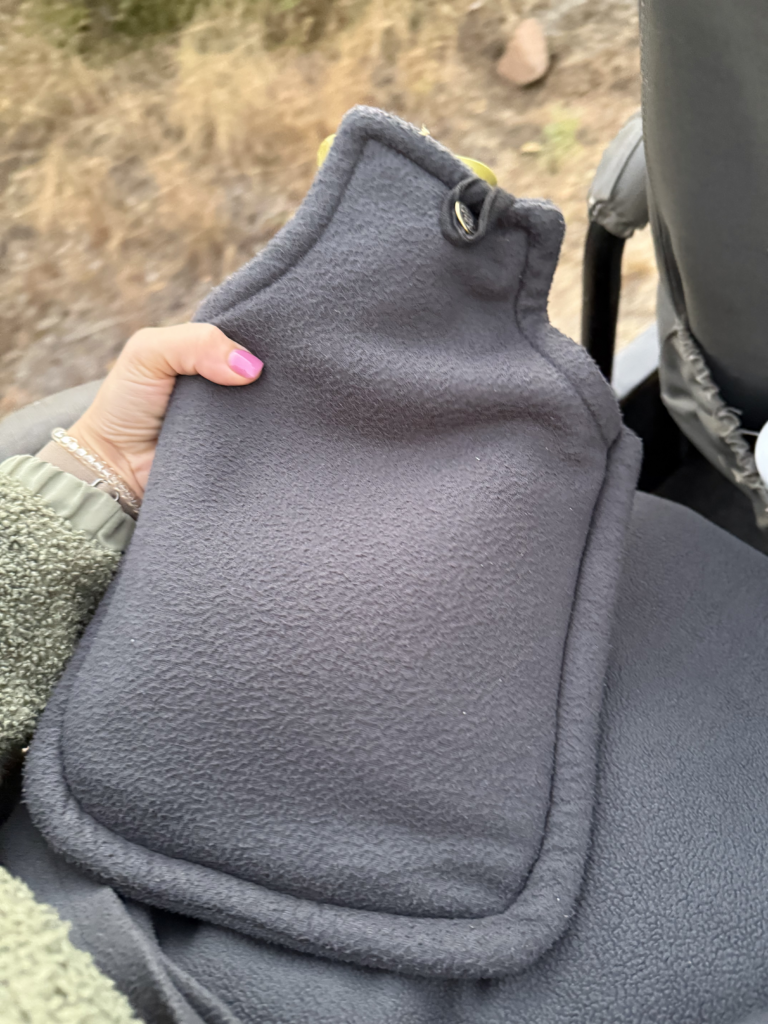
Before heading out, tea, coffee, and a pastry are set out for you; just enough to get going without slowing you down. We went in June, which is winter in the Southern Hemisphere, so mornings were cool and crisp. The lodge provided warm blankets for the vehicle and a small heated bag they called a Bush Baby, tucked right into your lap for the drive. It was a small, thoughtful touch that made a big difference at dawn.
The Game Drive: Three Hours in the Bush
A huge part of what makes a South Africa safari so exceptional comes down to two people you may not have thought to ask about: your guide and your tracker.
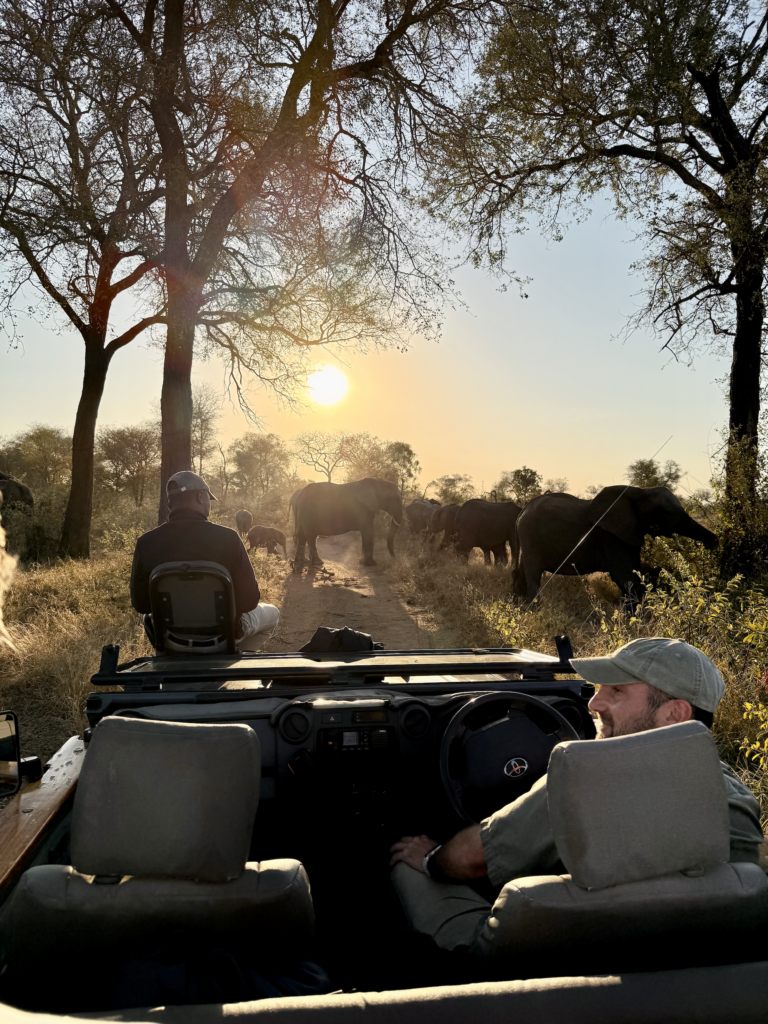
Our guide Julian kept us educated every moment we were in the bush. Explaining animal behaviors, reading the landscape, and making our ten-year-old son feel like a real part of every discovery. Our tracker Herbert rode up front, eyes locked on the ground, scanning for footprints, broken branches, and behavioral cues that told him exactly where the animals were heading. Together, they were an unstoppable team.
Herbert grew up in the bush and has been tracking since he was eight years old. He knows that landscape the way most people know their own neighborhood. Months after our trip, he messaged us on WhatsApp just to check in. That’s not a transaction, that’s a connection. And it’s one our son will carry with him for a very long time.
A Guide and tracker make all the difference in the world!
We also did a safari in Zimbabwe without a dedicated tracker, and the difference was immediately noticeable. Our guide there was wonderful, but managing the vehicle, the guests, the education, and the tracking alone is simply too much to ask of one person. Animals were harder to find, and the experience reflected it.
A dedicated tracker is not a luxury add-on. It is the difference between a good game drive and a great one. When you book through a travel advisor, these are exactly the details we know to ask about, and advocate for, on your behalf.
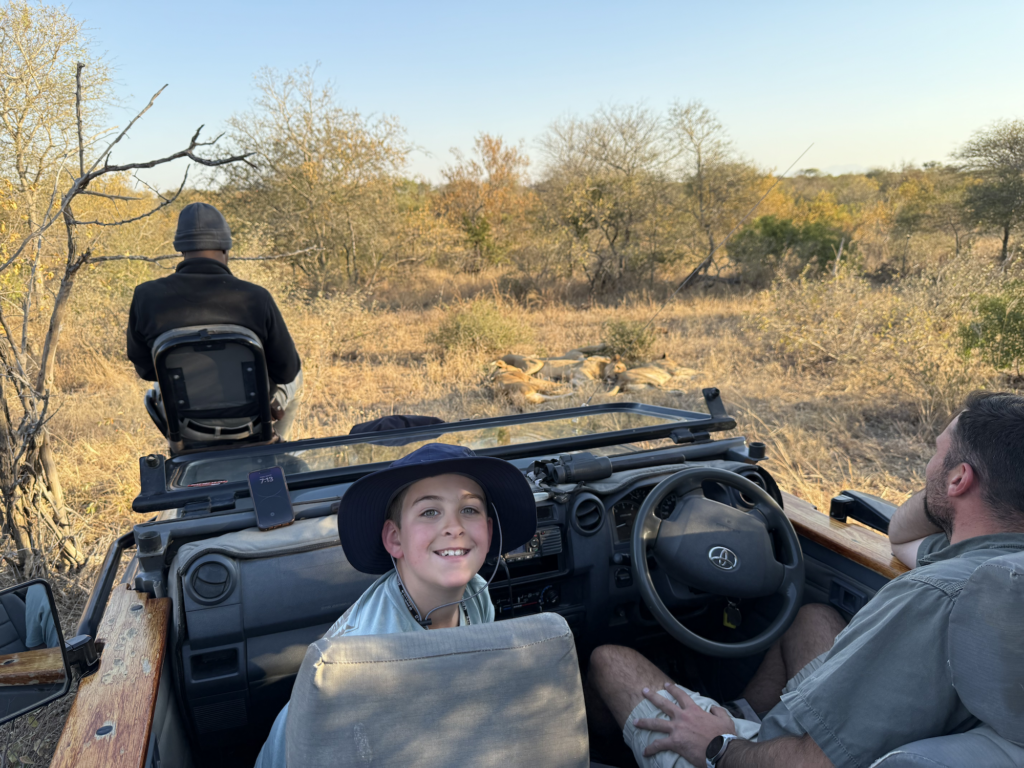
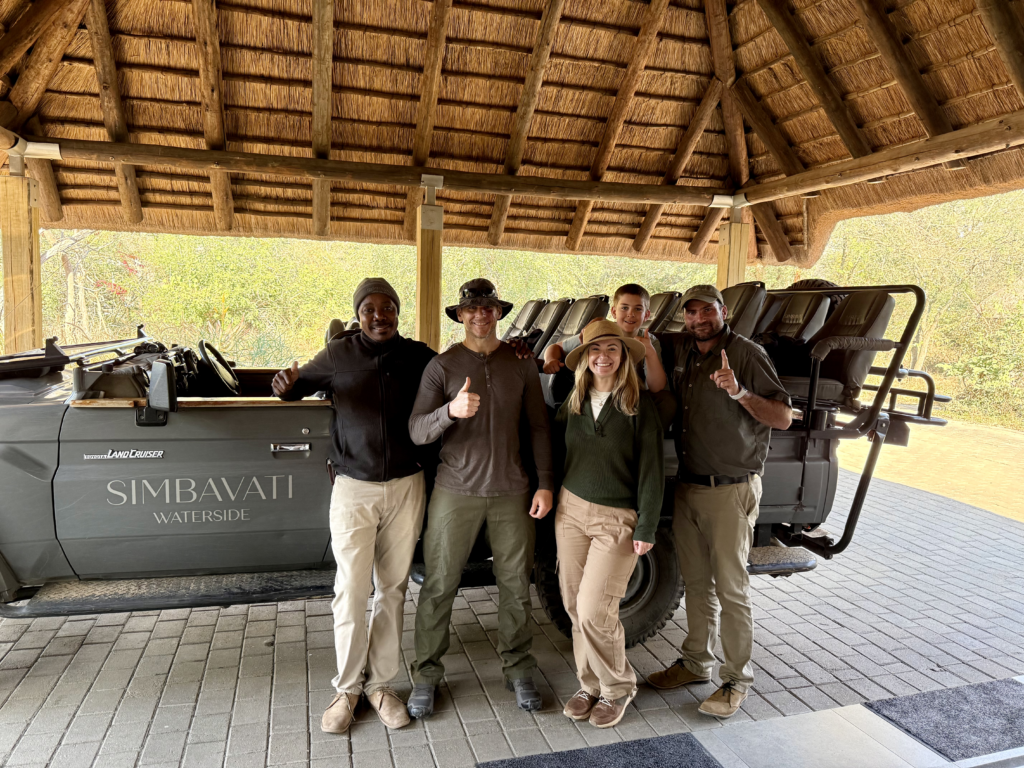
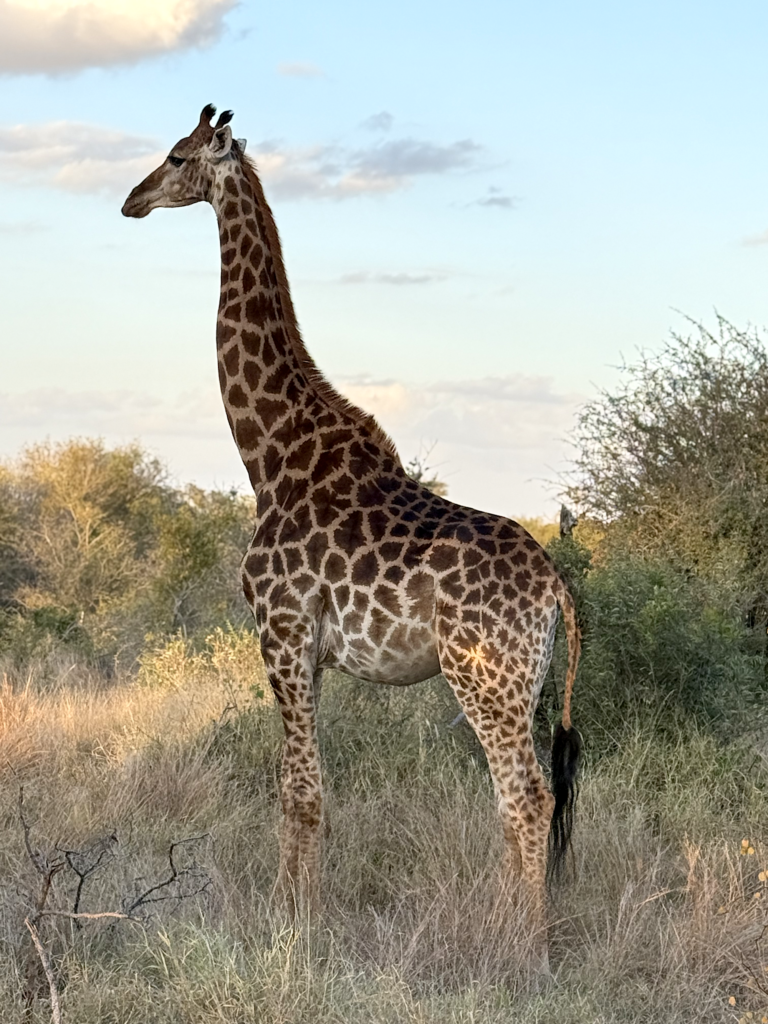
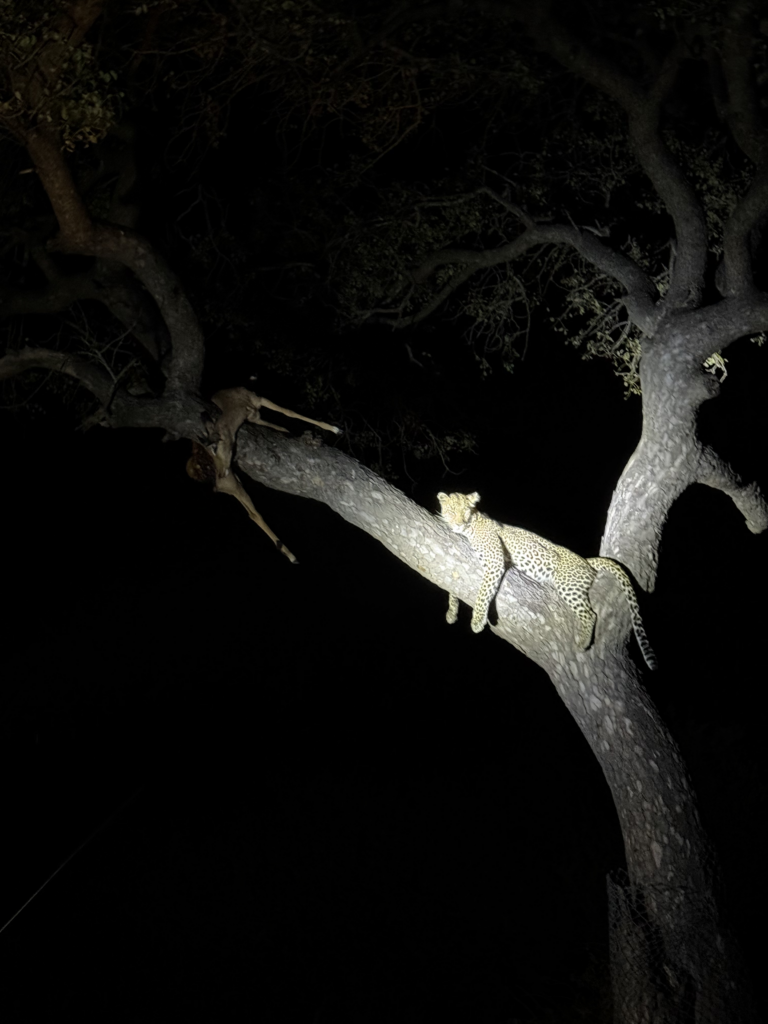
You’re out in the vehicle as the sun starts to rise, and the bush wakes up around you. Morning is prime time — animals are active, the light is golden, and the air is still cool. This is when you might find a pride of lions finishing a night hunt, a herd of elephants moving toward water, or a leopard draped across a branch like it owns the place. Because it does.
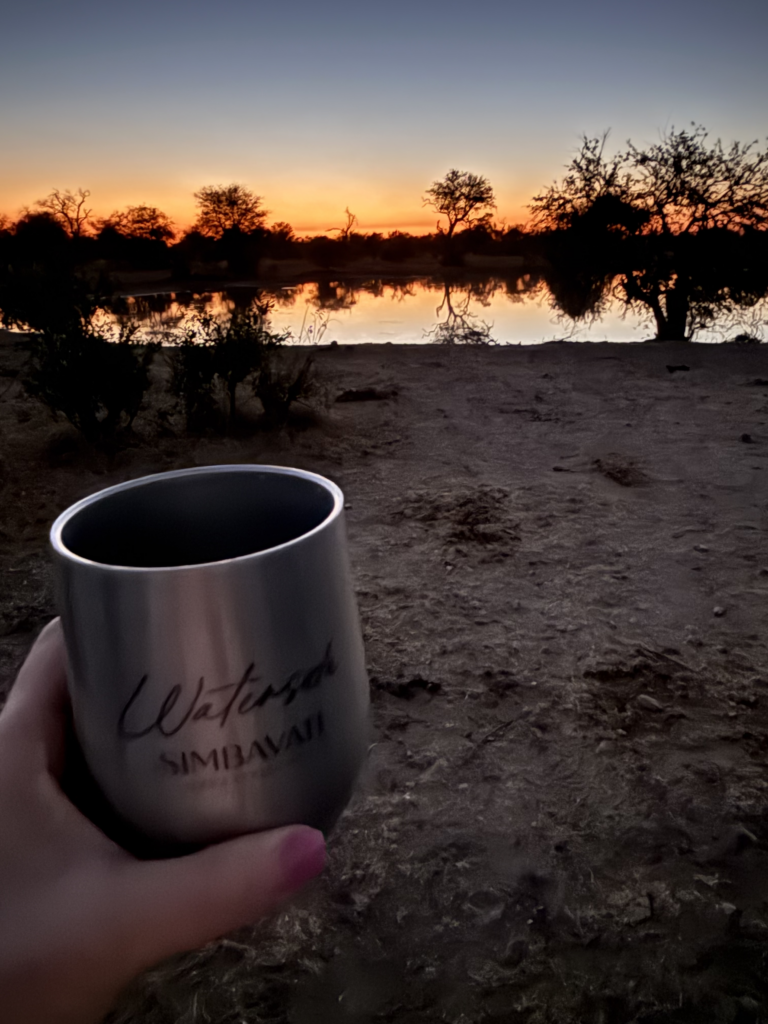
The game drive runs about three hours, and halfway through, your guide pulls over and you step out of the vehicle to stretch your legs. Fresh coffee is brewed right there in the bush — and here’s where it gets fun. It’s served with a splash of Amarula, a South African cream liquer made from the fruit that elephants love to eat. They call it elephant’s milk. You’ll call it your new favorite thing.
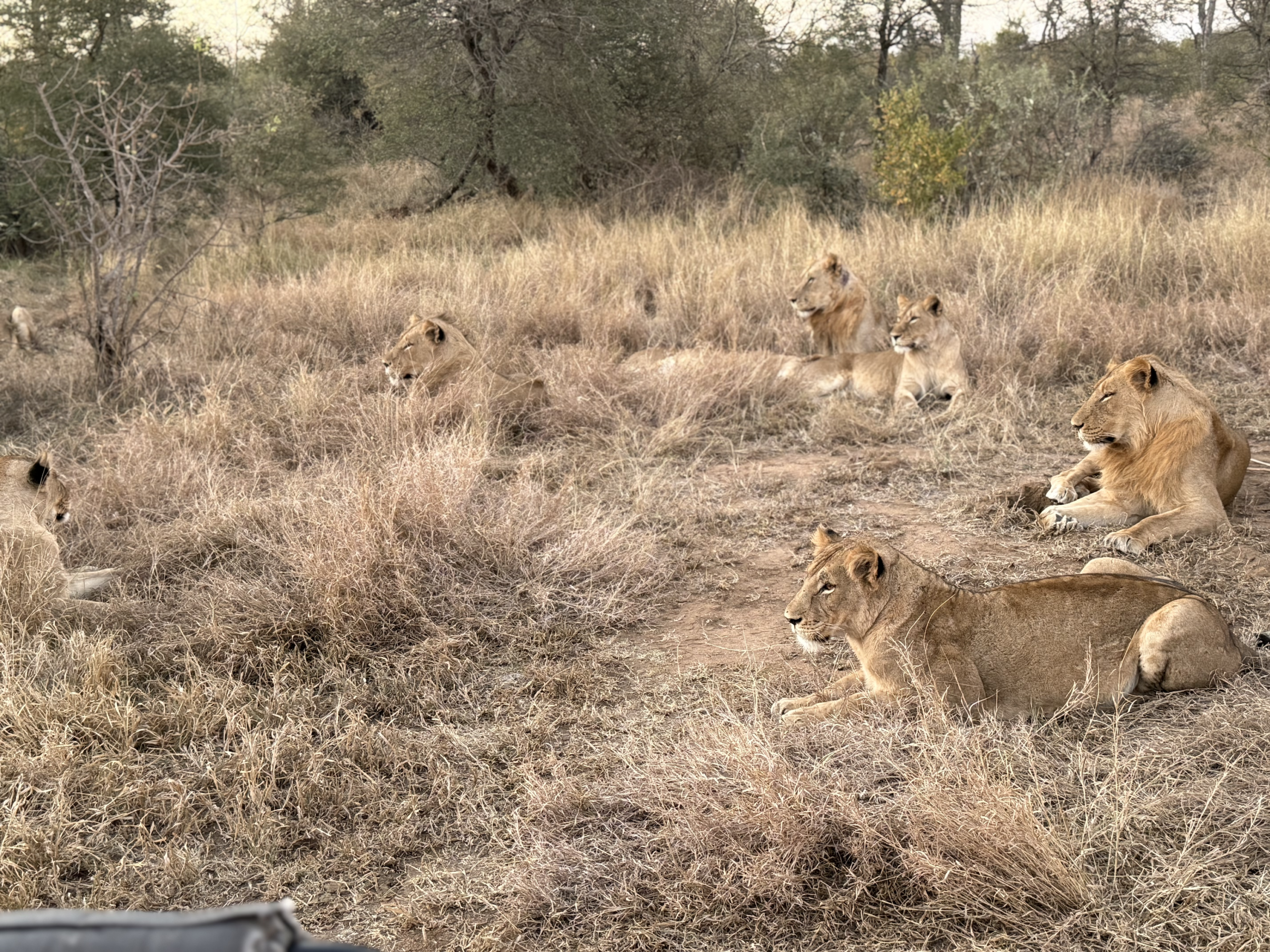
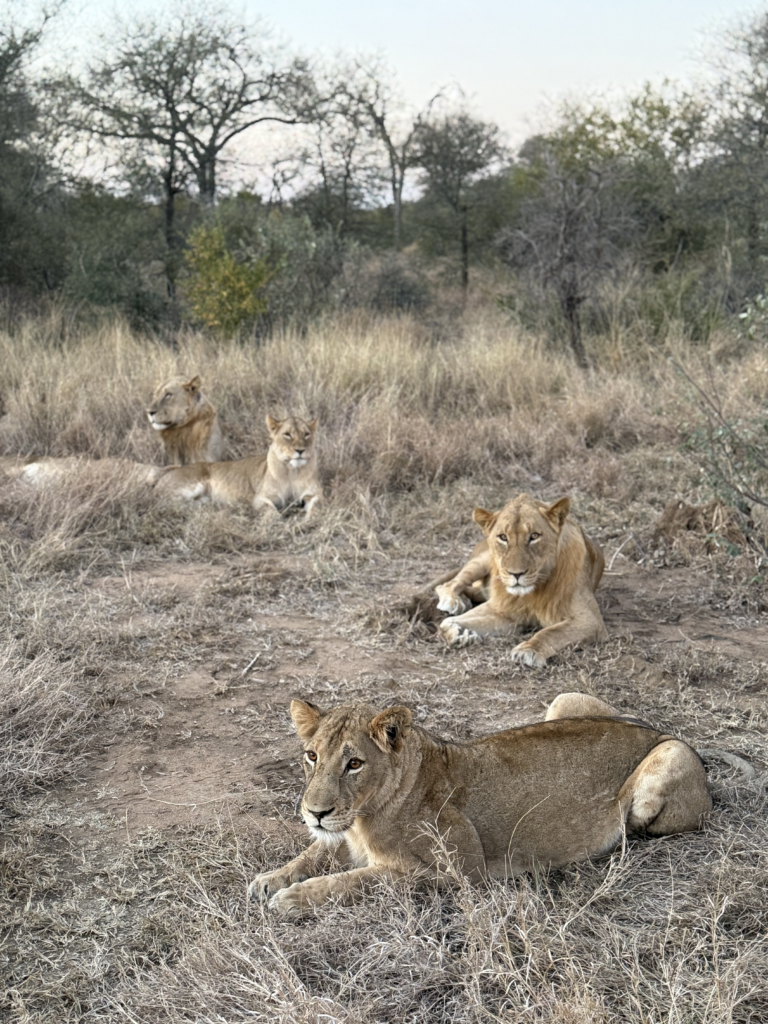
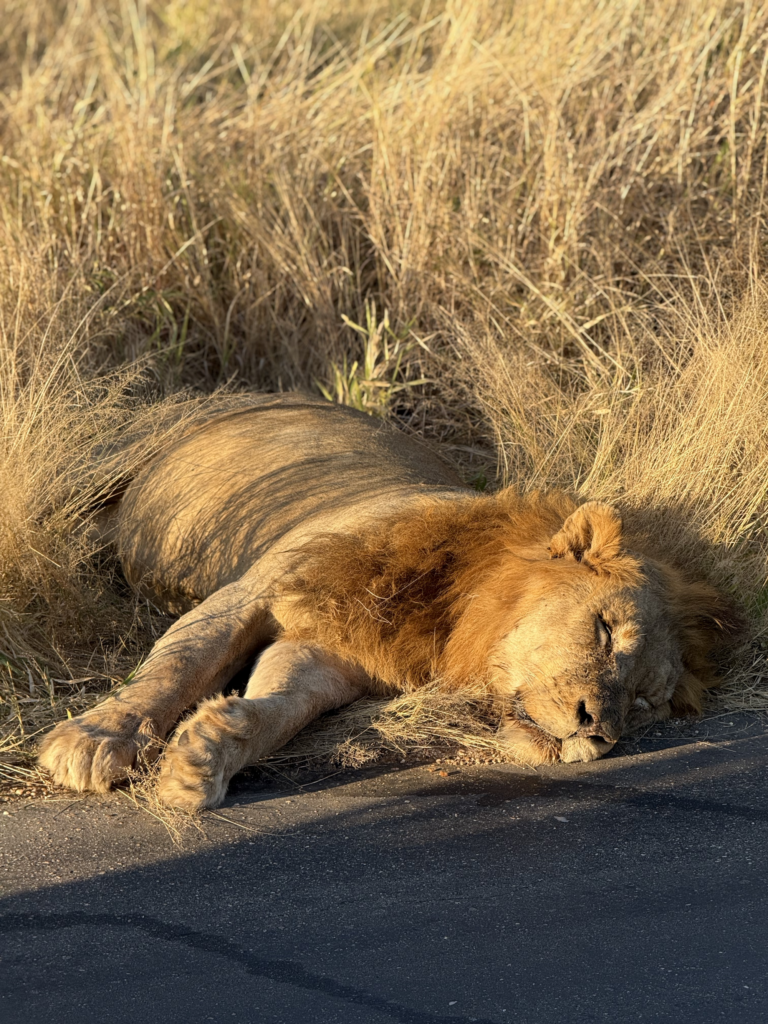
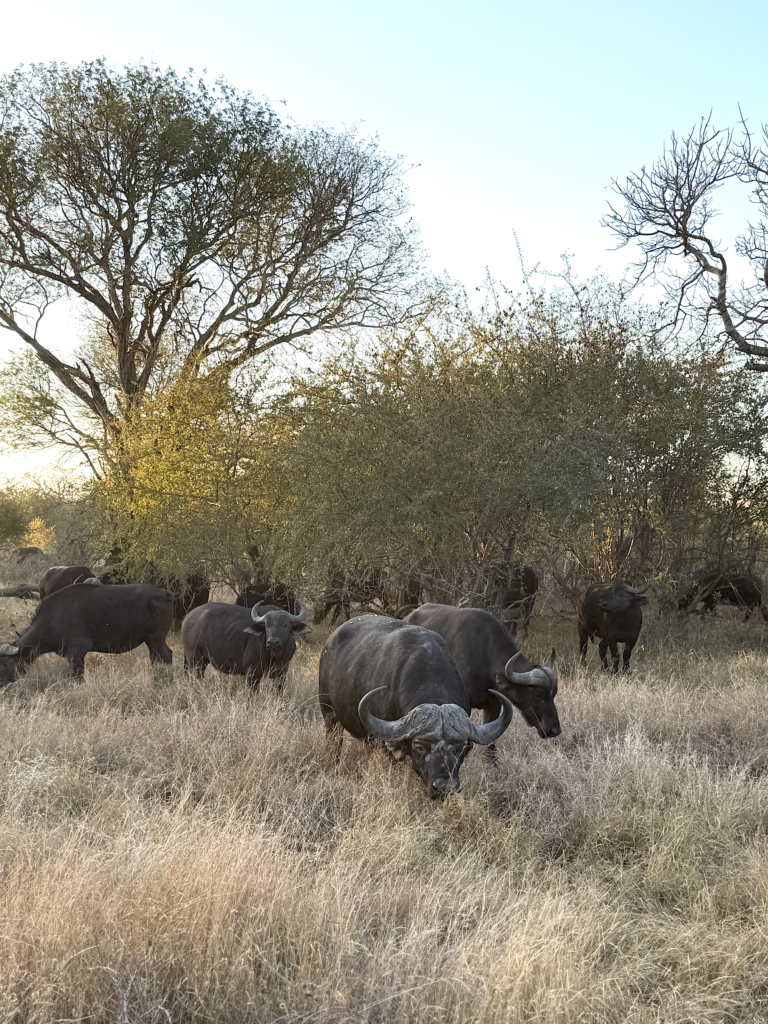
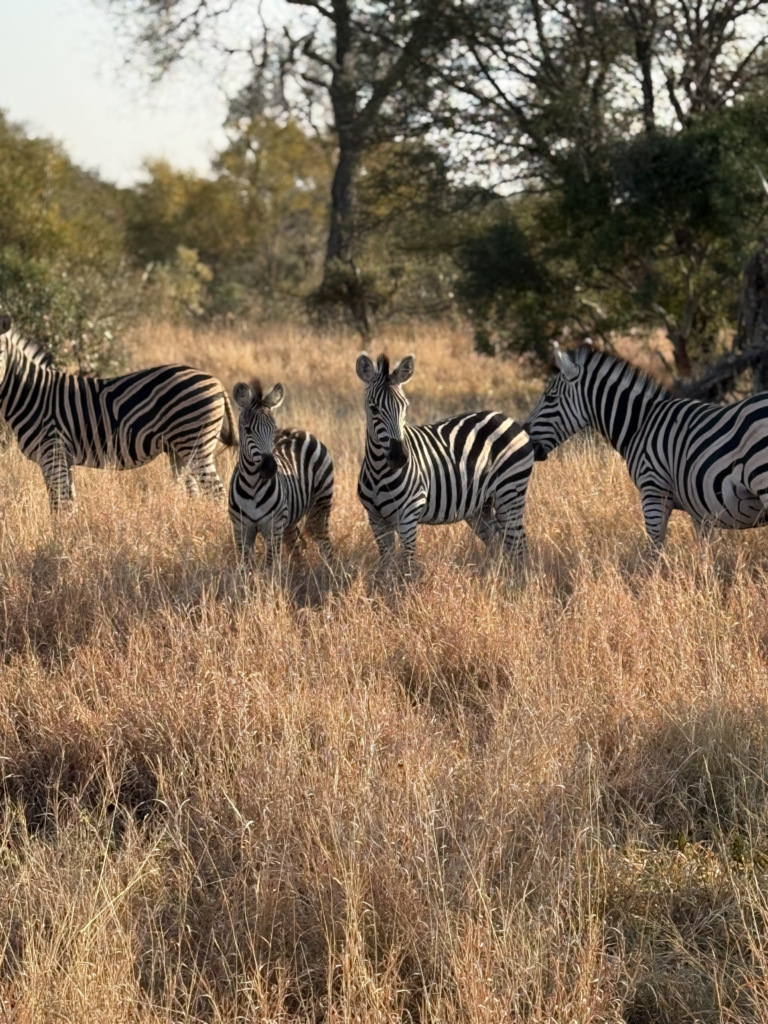
On our very first game drive, we saw the Big 5 (elephant, lion, rhino, cape buffalo and leopard). Don’t expect this on your first safari game drive though – we got lucky! We rolled up to a pride of ten lions napping in the grass — engine off, no glass between us, completely silent. At dusk that same evening, a herd of elephants crossed the road directly in front of us. What surprised us most wasn’t what we saw — it was what we felt. Humbled. Present. Completely alive.
Breakfast Back at the Lodge
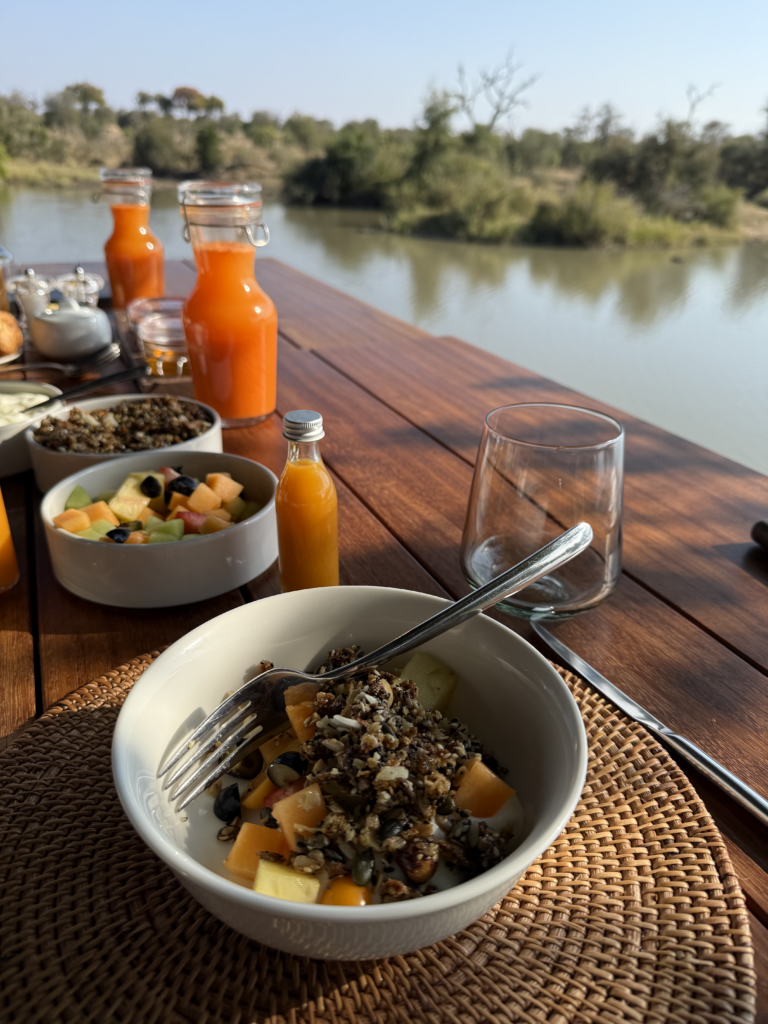
When you return from the morning drive, a proper breakfast is waiting. A yogurt and granola is set out first, and then you put in your order for a full plated breakfast. Every morning started with a shot of fresh ginger juice or the juice of the day — a simple ritual that somehow became one of our favorite parts of the whole experience.
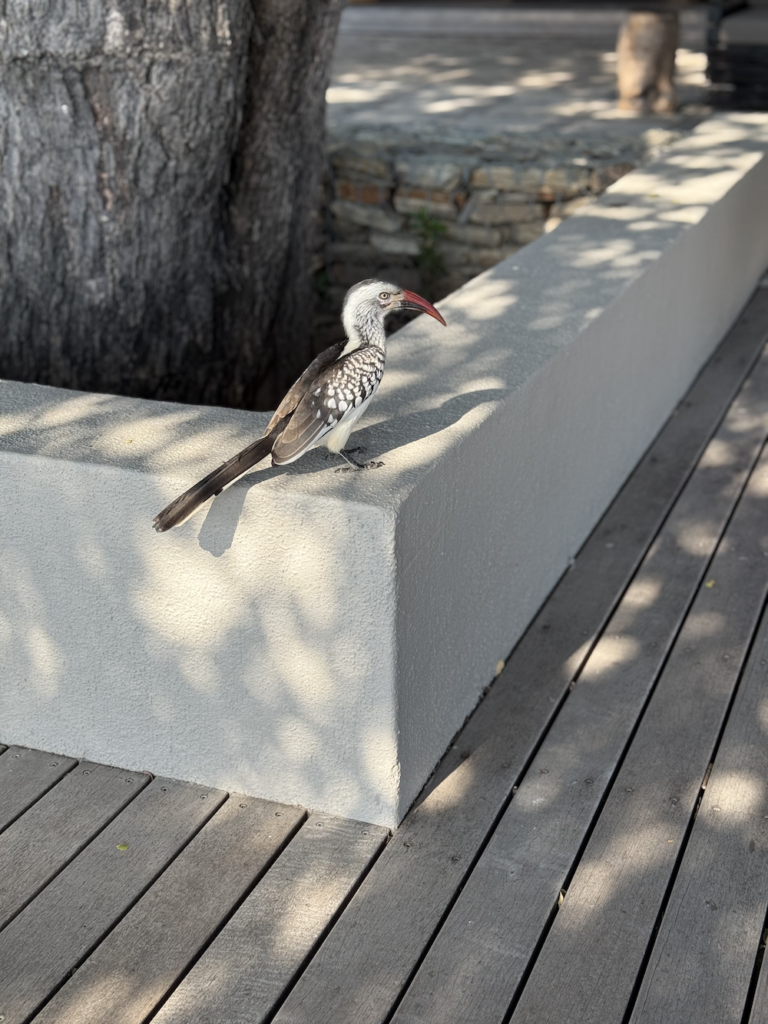
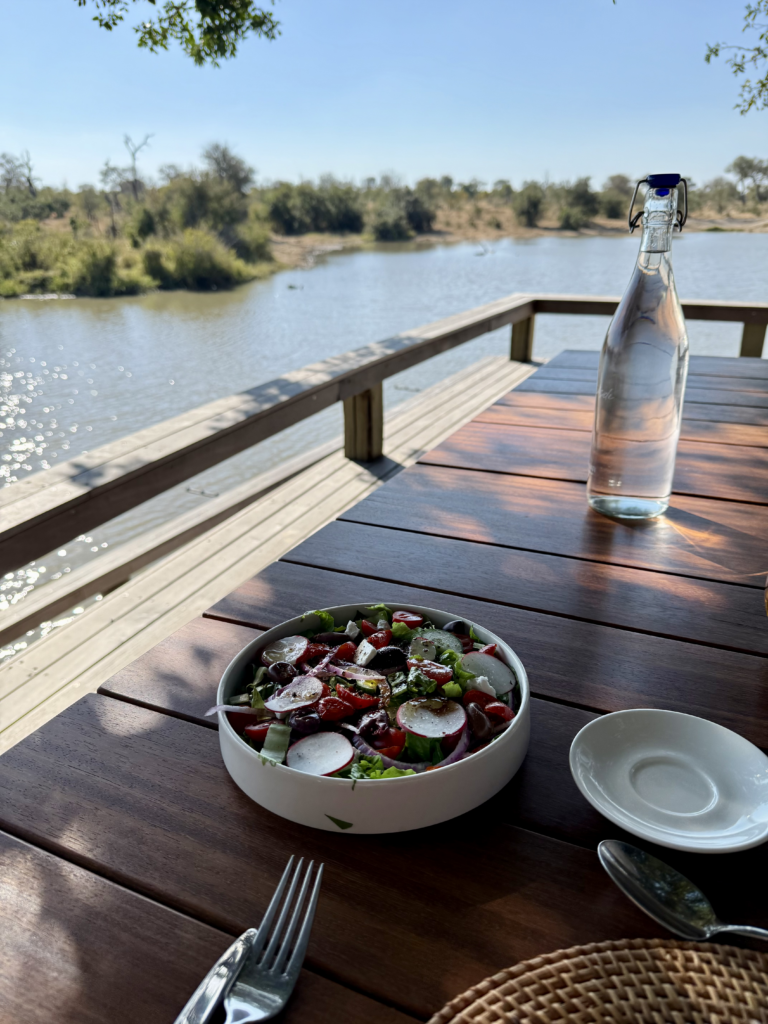
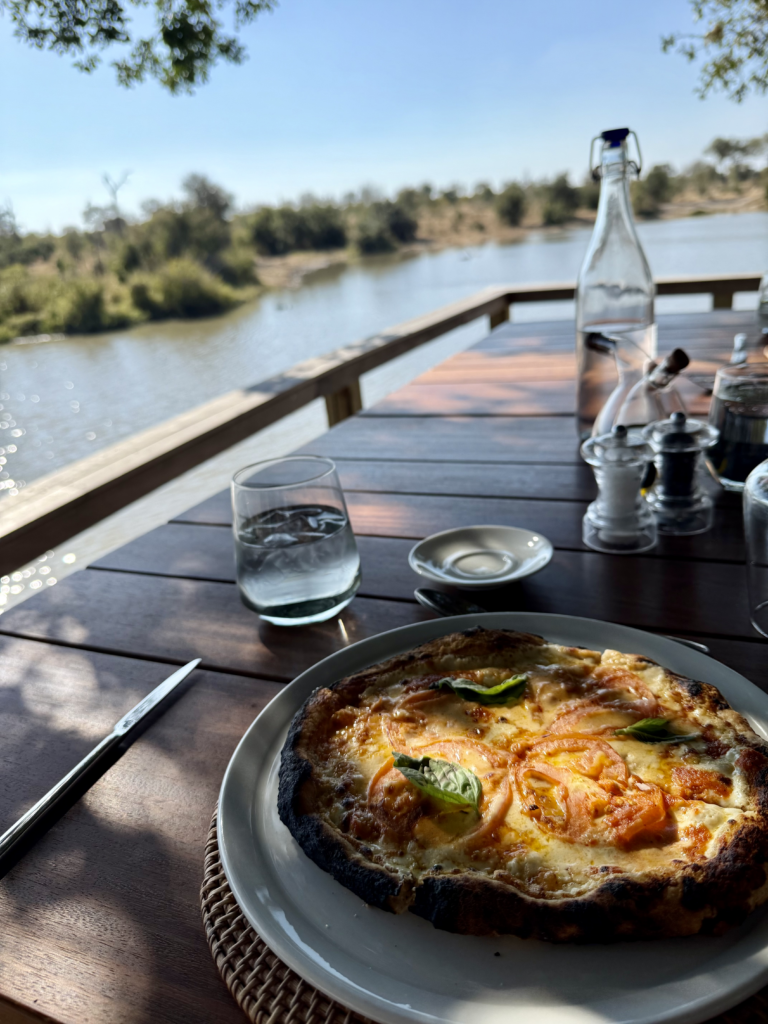
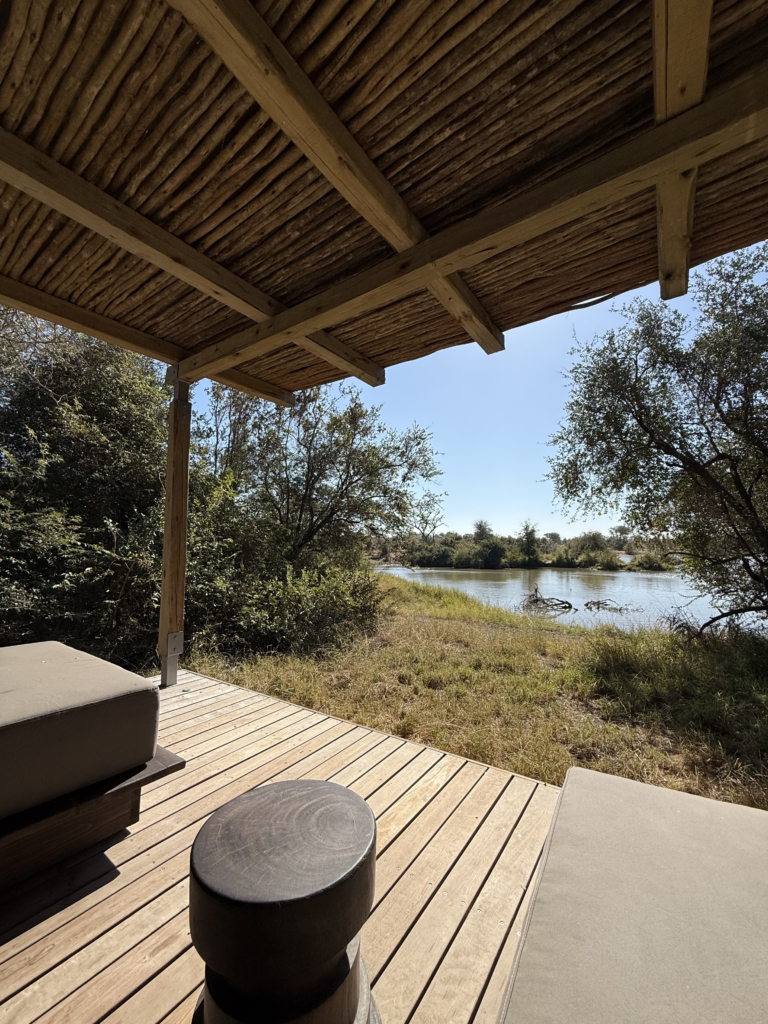
This isn’t a grab-and-go situation. It’s a meal, unhurried, often served al fresco with the sounds of the bush in the background. We felt like we were on the set of The Lion King. All of the animals would appear at the watering hole and we even had out very own Zazu! Our son made a song about him that other guests were singing in their heads.
The Afternoon: The Part Nobody Talks About Enough
After breakfast, the afternoon is entirely yours — and this is the part of safari that genuinely surprised us.
We read, worked out, animal watched at the watering hole, napped, had a massage, and swam when it was warm enough. There’s no agenda, no pressure. Just the sounds of the bush and however you want to fill a few slow, unhurried hours. One afternoon, the lodge took us to the owner’s private villa to see a collection of animal bones and skeletons found on drives over the years. It was one of those unexpected moments that became a quiet highlight of the trip — part natural history lesson, part intimate peek behind the curtain of lodge life.
A light lunch is served and High tea arrives in the late afternoon, and then it’s time to head back out.
If you’ve ever needed permission to truly slow down, a safari afternoon is it.

The Evening: Sundowners, Stars, and Dinner in the Bush
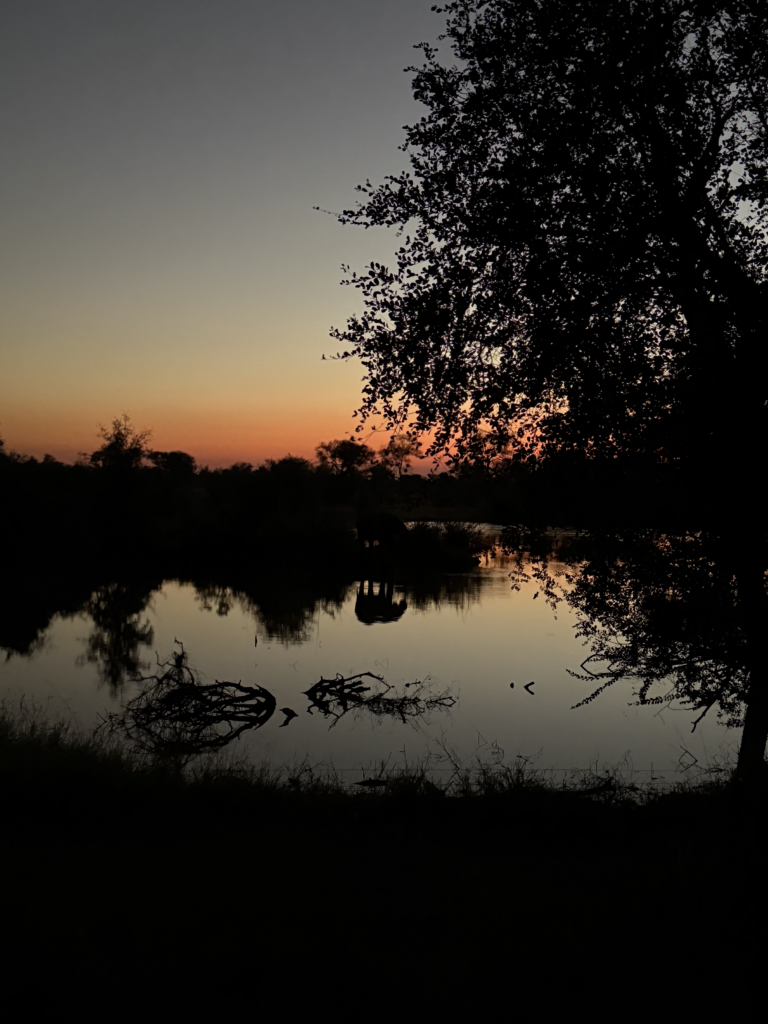
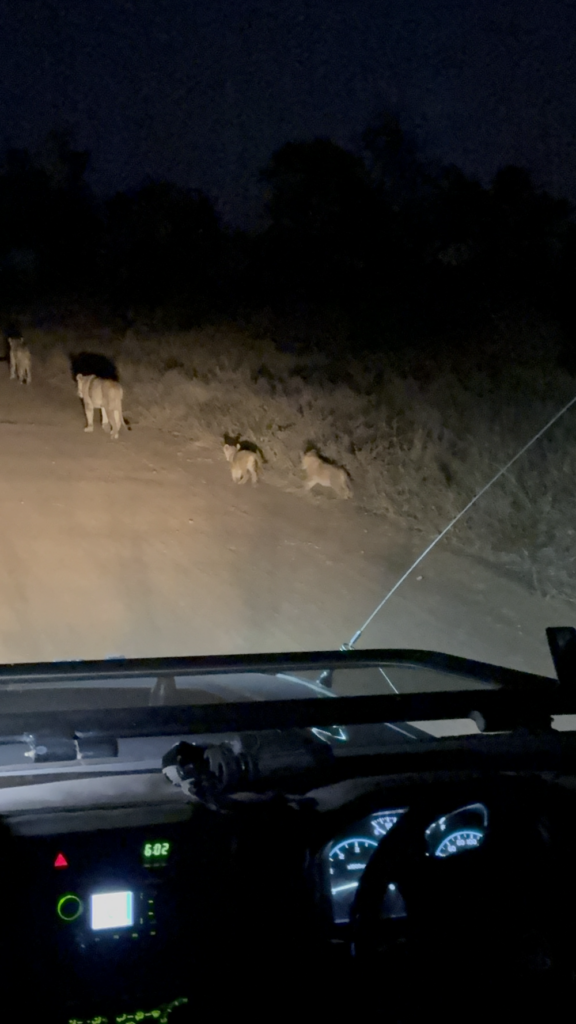
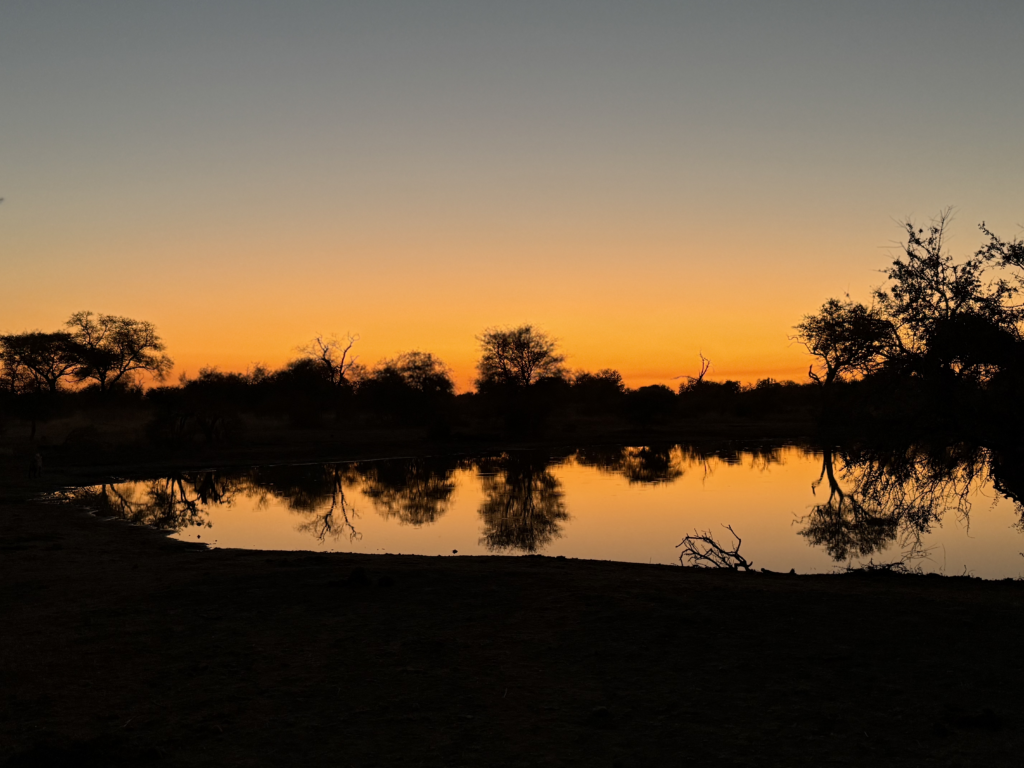
The evening game drive has a completely different energy than the morning. The light turns amber, then rose-gold, and animals come back out as the heat fades. We saw lion cubs, leopards and our guide even pointed out a chameleon in a tree! We didn’t expect to find a chameleon on safari.
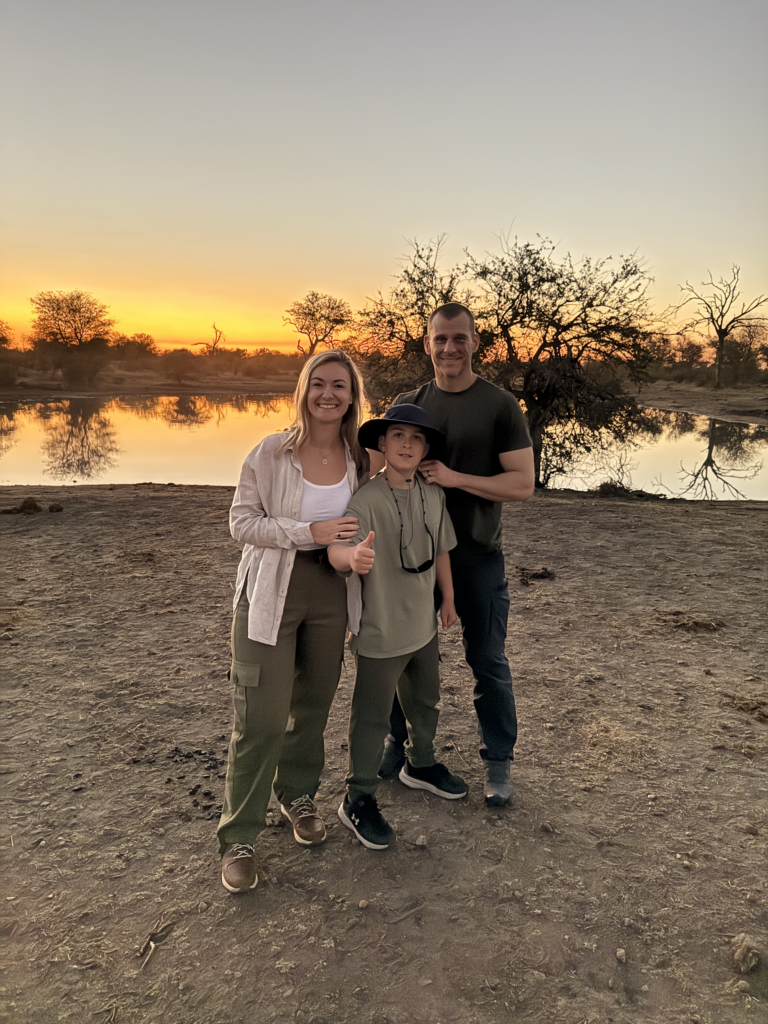
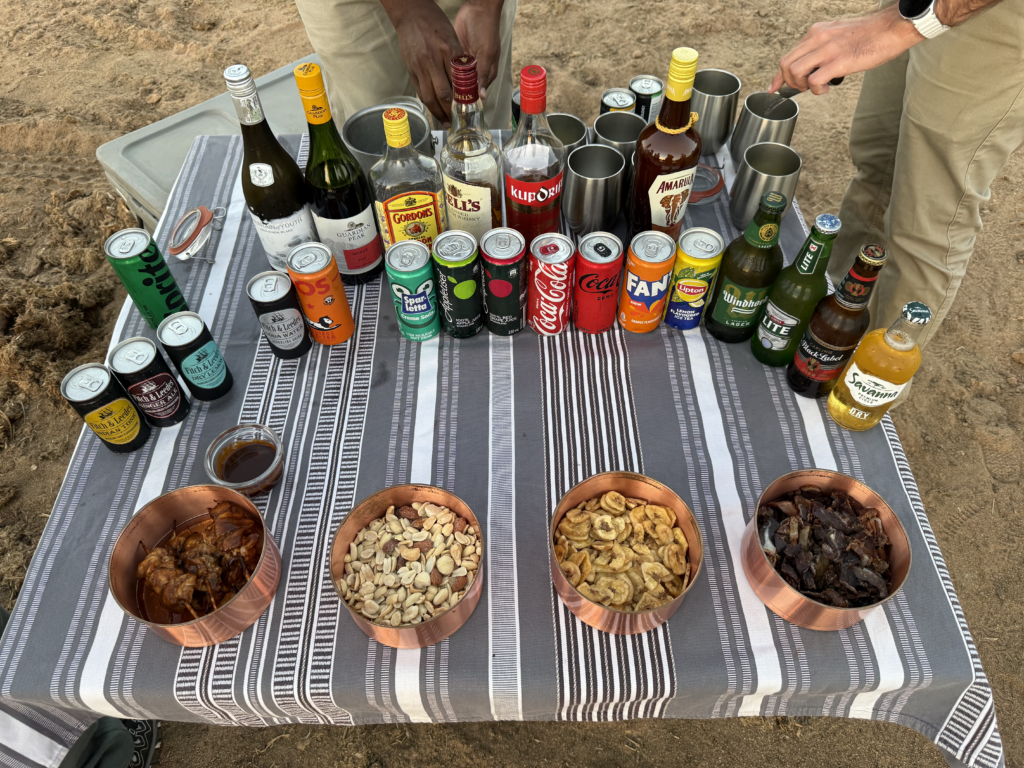
Partway through, your guide stops the vehicle and sets up a table right there in the middle of the bush — drinks, beers, soft drinks, and snacks laid out like it’s the most natural thing in the world. Dried mango, biltong, peanuts, chips. You stand in the middle of the savanna with a cold drink in hand as the sun goes down, and there are simply no words for it.
This is the sundowner. This is the moment. The one you’ll try to describe to people at home and never quite get right.
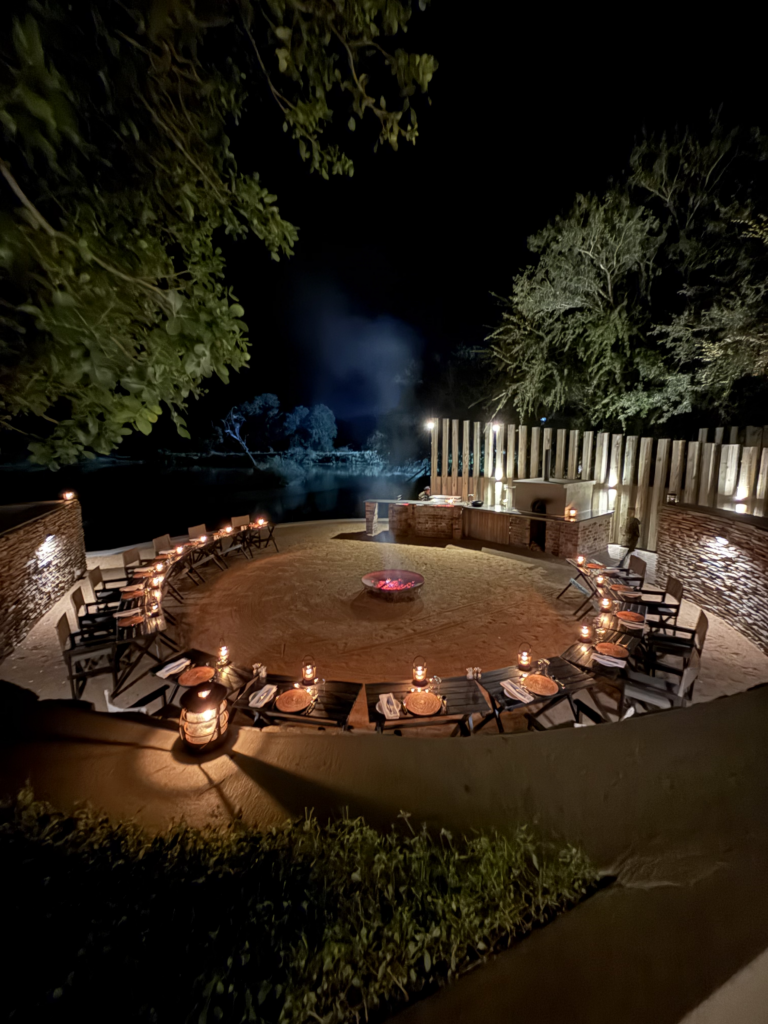
Back at the lodge, dinner is an event. Whether it’s a long table under the stars, a boma dinner around an open fire, or a private bush dinner set up just for two — it caps the day in a way that feels almost cinematic.
What to Pair With Your Safari
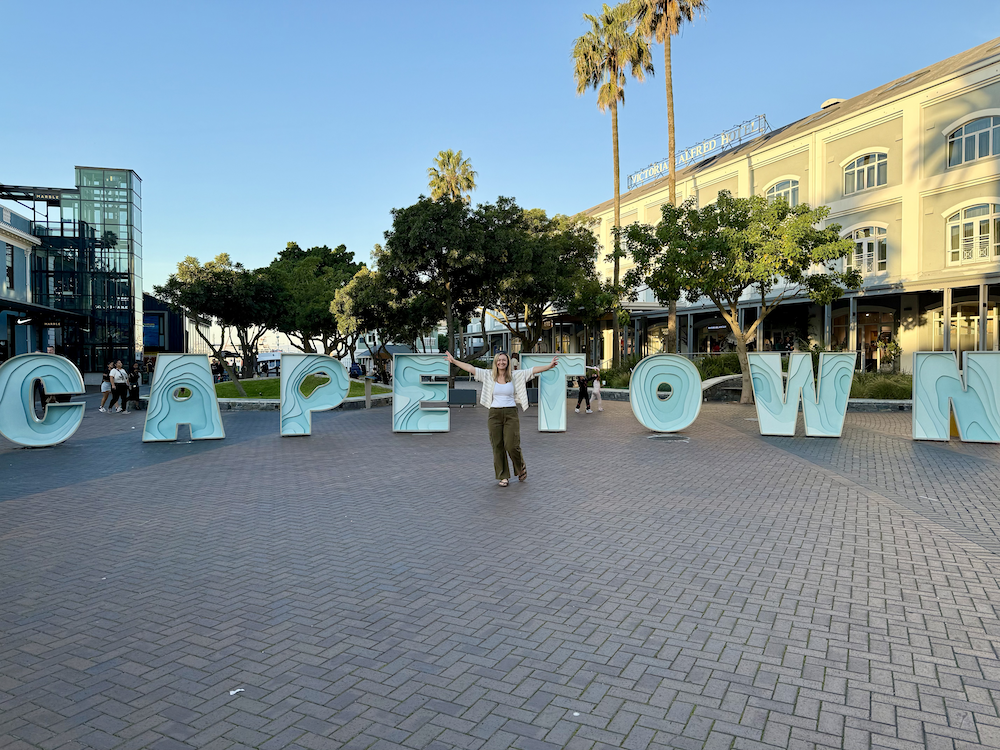
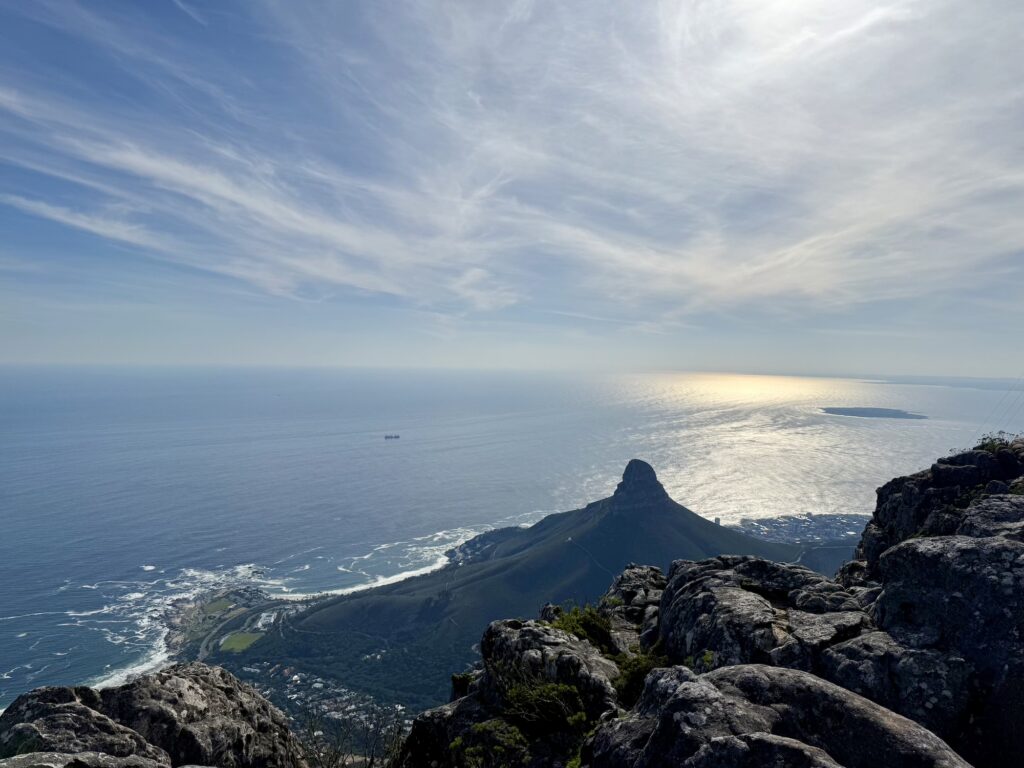
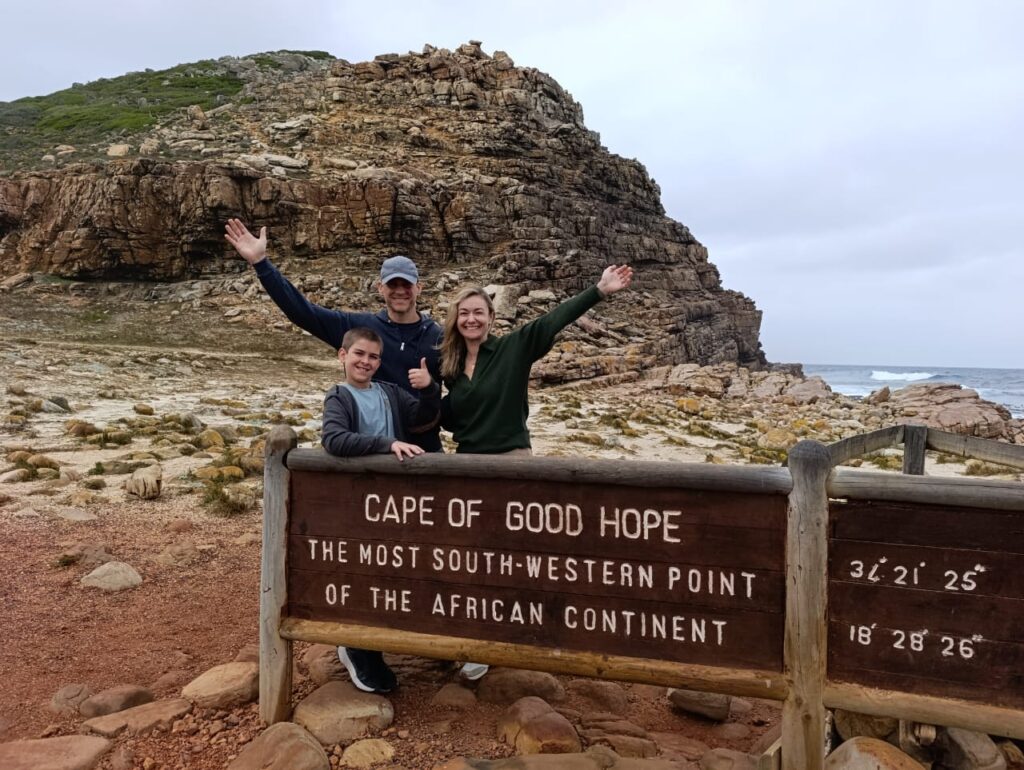
A South Africa safari pairs beautifully with a few days in Cape Town, a drive through the Cape Winelands, or an extension to Victoria Falls. It also combines naturally with a beach escape — Zanzibar, Mozambique, or the Seychelles make a stunning second chapter after a week in the bush.
It’s the kind of trip that covers every mood: wild and wonder-filled, then slow and sun-soaked.
Frequently Asked Questions About Going on Safari in South Africa
How many days do you need for a safari in South Africa?
We recommend a minimum of four nights, but five to seven is the sweet spot. The first day or two you’re settling in and finding your rhythm; by day three, you’re fully in it and the sightings start to feel almost effortless. Leaving too soon means you’ll just be hitting your stride when it’s time to go.
Is a safari safe for kids?
Yes, and it can be one of the most powerful experiences you give a child. Our ten-year-old son came with us and it was transformative for him. The key is choosing the right lodge, and there are a few things to know before you book.
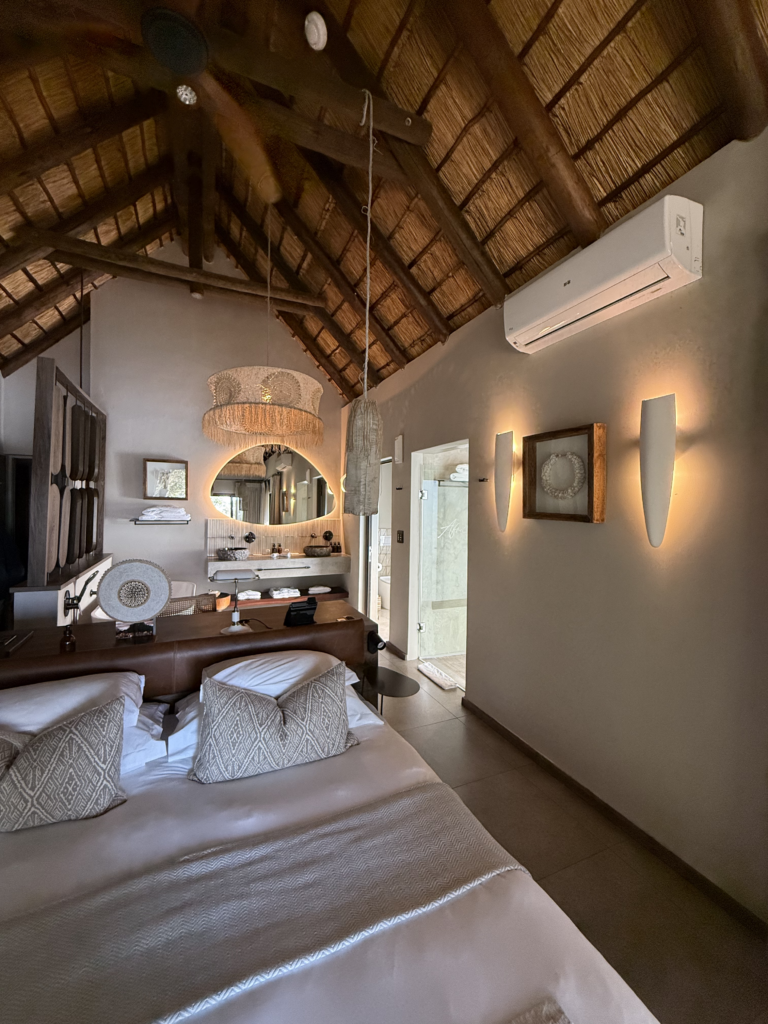
Most luxury safari lodges are designed as romantic retreats; think open-plan studio layouts with glass-walled or open shower spaces and no closed-off bathroom. Beautiful for two adults, not exactly practical for a family. If you’re traveling with kids, you’ll want to specifically request a family suite that offers two separate bedrooms and two full bathrooms. Not every lodge has them, and the ones that do book quickly.
Some lodges also have minimum age requirements, so it’s important to confirm before you fall in love with a property. This is exactly the kind of detail a travel advisor catches before it becomes a problem — so you arrive relaxed, not scrambling.
What is the best time of year to go on safari in South Africa?
May through October is the dry season and generally considered the best time for game viewing. We went in June and the sightings were exceptional. The animals gather around water sources, vegetation is lower, and visibility is at its best. It’s also winter in the Southern Hemisphere, so mornings are cool and afternoons are comfortable.
Do you need a tracker and a guide?
Yes, and this is one of the most important things to ask about before you book. A guide educates and manages the vehicle and guests while a tracker focuses entirely on reading animal behavior, footprints, and the landscape to find wildlife. We experienced a safari without a dedicated tracker and the difference was significant. Always ask if both are included.
What should I pack for a safari?
Neutral colors are key; think khaki, olive, tan, and brown. Layers are essential, especially for early morning drives when it can be surprisingly cold. Most luxury lodges have weight limits on light aircraft transfers, so packing light is important. Your travel advisor can send you a full packing guide tailored to your specific lodge and itinerary.
Is a safari worth the cost?
Without question! A luxury safari is an all-inclusive experience – game drives, meals, drinks, transfers, and the expertise of your guide and tracker are typically all included. When you factor that in, the value is exceptional. More importantly, it’s the kind of trip that genuinely changes you. We’ve traveled a lot, and nothing has come close.
Do I need a travel advisor to book a safari?
You don’t need one, but you’ll want one. The details that make a safari extraordinary (the right lodge, the right season, a dedicated tracker, airport greeters, emergency support when a flight gets cancelled) are things an experienced advisor knows to build in before you even think to ask.
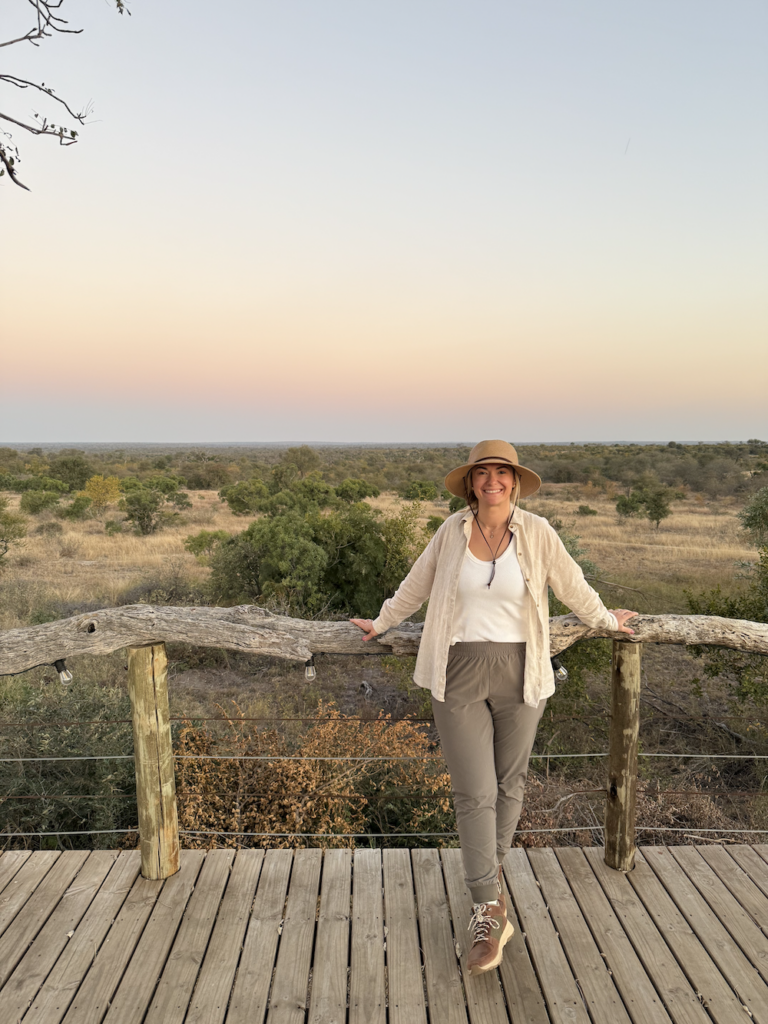
Now That you Know What to Expect on Safari, Are Ready to Start Planning Your South Africa Safari?
A safari is one of those trips that genuinely changes the way you see the world. The planning details — the right lodge, the right season, the right combination of experiences — make all the difference between a good trip and an unforgettable one.
That’s where we come in. As a luxury travel advisor specializing in experiential travel, we handle every detail so you can show up and be fully present for every moment in the bush.
→ BEGIN PLANNING with Megan at Bridie Travel
P.S. If you’ve ever seen footage of the Great Migration, thousands of wildebeest crossing a crocodile-filled river, know that witnessing it in person requires specific timing and advance planning. The river crossings happen in a window, at a location, and they don’t wait for anyone. It’s absolutely worth building your entire trip around if it’s on your list. Just don’t leave it to chance!



Be the first to comment